
The GTM Slop Problem, Part 3: WTF is GTM, Anyway?
Updated: Apr 14

Ask ten executives in B2B SaaS what “go-to-market” means and you will hear ten different definitions, most of them self-serving.
The brand agency calls it narrative. The PR firm calls it market positioning. The SDR leader calls it outbound. The AI vendor call it automation. Demand gen says campaigns. The CRO may insist GTM simply means sales and the relevant business intelligence that makes future sales more predictable. Finally, the consultant might define it as a "growth" or "category design" strategy after a few interviews and some market analysis.
The problem with this is that nearly everyone is myopically describing the slice they sell, run, or control. Few define GTM as the full commercial system that actually carries product value to end customers.
You could chalk this up as a terminology problem if buyers were more forgiving, but they aren’t in this market. The misuse and misapplication of GTM creates real commercial risk.
In categories like AdTech and MarTech, where development lifecycles are shorter than they've ever been, product imitation is instantaneous, and AI has made mediocre marketing easier to mass-produce, buyer intolerance and confusion compounds quickly.
Not surprisingly, buyers are spending more time educating themselves and getting less tolerant of message drift or smoke and mirrors when they finally do talk. Case in point, I haven’t taken a cold call in years. My phone stays on do not disturb for a reason.
Nor have I responded to a pitch via InMail or my inbox in longer than I can remember. Surely this can't be because I don't have challenges or choke points that certain tech or services can remedy.
Fun facts: Gartner found that nearly 70% of b2b buyers report inconsistencies between what they see on a vendor’s website and what they hear from sellers. The result of this is that 61% of B2B buyers prefer a rep-free buying experience.
The problem is there are more companies, point solutions. content and - of course - more AI, which means more undifferentiated GTM slop. The market and its buyers have cast their vote, and what they need out of GTM is more product-to-value coherence.
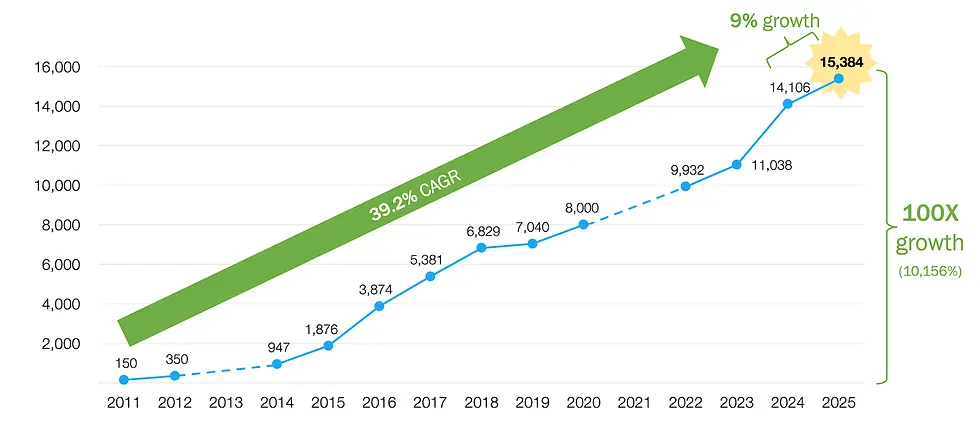
Fun facts: Chiefmartec’s 2025 landscape counted 15,384 martech solutions, up from 150 in 2011.
So WTF is GTM, anyway?
First, let's define what it is not. GTM is neither PR nor a marketing campaign. It is not outbound sequences, launch emails, LinkedIn posts, or a burst of activity around a release date. And it is definitely not just a “communications challenge,” which is how a lot of AdTech, MarTech, and AI startups still frame it when things are not landing in market.
That framing misses the real issue. GTM is about whether the whole commercial system works. It is the mechanism that carries product value into the market in a way buyers can understand, sales can use, and customers can actually experience. It connects what the product really does, warts and all, to how it gets positioned, packaged, sold, implemented, and proven in the field.
And that is where GTM Intelligence comes in. If GTM is the commercial system, GTM Intelligence is the layer that gives that system coherence. It connects product truth, buyer reality, competitive context, and field feedback into the decisions that shape how a company commercializes.
More importantly, it creates an always-on learning loop. Over time, temporal intelligence graphs, decision trails, buyer objections, message performance, and field signals become proprietary commercial IP, not just scattered inputs lost across people, decks, and Slack threads.
Without that layer, companies fall back on activity, opinion, and internal politics. With it, they can make sharper commercialization decisions before the market exposes the gaps.
A lot of the current GTM market is built to work around that gap instead of closing it. Agencies dress it up, PR firms amplify it, and marketing teams polish it. Sales teams improvise through it, but the underlying disconnect stays put.
So what to do about it? In B2B AdTech and MarTech, that work comes down to three responsibilities.
1) Define the Market
This sounds obvious until you see how often companies skip it. Most have product language, not market language. The how and the what are well understood, but the why is still fuzzy. A segment spreadsheet stands in for a real ICP, and a long competitor list gets mistaken for a clear picture of the alternatives buyers are actually weighing.
Defining the market is deciding what game you are actually playing, which wedge is credible, which buyers matter first, and where you should stop wasting motion. It means narrative, ICP, competitive framing, and market-entry logic living inside one decision system rather than four separate work streams.
2) Shape the Offer
This is where abstraction stops helping. What exactly are you selling? How is it packaged? What can you credibly claim? What proof do you have now, and what proof do you still need? What should Sales say in a must-win conversation? What should Customer Success reinforce after the deal closes?
A surprising amount of so-called GTM breaks here because what sounded good in a narrative exercise never became a field-ready commercial offer. The offer is where product truth either becomes understandable or drifts toward incoherence. That is why packaging, proof, and enablement (e.g., real team learning vs. collateral) sit at the center of any serious GTM system.
3) Activate Growth
This is the part most people call GTM because it is the part they can see. It includes campaigns, launches, outbound motion, partner activity, and measurement. All of it matters, but none of it matters enough if the first two responsibilities are weak.
Activating growth is not just turning on channels. It is sequencing the work, aligning incentives, setting stage gates, instrumenting the right feedback loops, and making sure the company learns from the market faster than the market punishes it.
A New GTM Category
The current market is full of adjacent providers and short on anyone willing to own the full chain between product value and commercial execution. What fills that gap is not just strategy and not just execution. It is GTM Intelligence.
By GTM Intelligence, I don't mean RevOps dashboards, sales intelligence, or pipeline inspection tools. I mean the decisioning layer that determines what matters, what deserves focus, what the market needs to hear, and where the commercial risk is hiding (before it shows up in missed targets or weak adoption).

It sits upstream of branding, PR, campaign execution, and sales automation, but gives those functions direction. Its job is to help companies define the market, shape the offer, and activate growth without losing the real product truth along the way.
Why does this matter so much now?
Because weak GTM gets exposed faster than ever, whether we're talking product launches, repositioning, partner plays, packaging shifts, or new market entry. All of it breaks more easily when the system underneath is loose or non-existent.
That is why the next winner here will not be another agency or another "GTM" point solution. It will be a true go-to-market decision system that helps B2B tech companies decide what matters, pressure-test what they plan to say, align teams faster, and turn market learning into action.
GTM is the work of carrying product value into the market in a way buyers can understand, teams can execute, and the business can continuously learn, adapt, and improve over time.
GTM Intelligence is the layer that makes that system coherent, current, and compounding.
In this market, that is not a nice-to-have. It is survival.
About Brett House
Brett House is a go-to-market and commercialization leader with more than two decades of experience helping AdTech, MarTech, DataTech, and AI companies turn complex products into clearer market stories, stronger commercial execution, and measurable growth. Across leadership roles at MediaRadar, Neustar, and Nielsen/eXelate, he has helped transform point solutions into category-defining platforms by aligning product, marketing, sales, and customer success around one coherent commercial system.
He is the Founder and CEO of HighSignals, a GTM Intelligence company, and Co-Founder of Signal & Noise, a media platform for more honest, operator-led conversations about what it really takes to grow and compete in modern B2B tech. HighSignals helps AdTech and MarTech companies carry product truth all the way to market in a way teams can execute and buyers can understand.


Comments